
Introduction
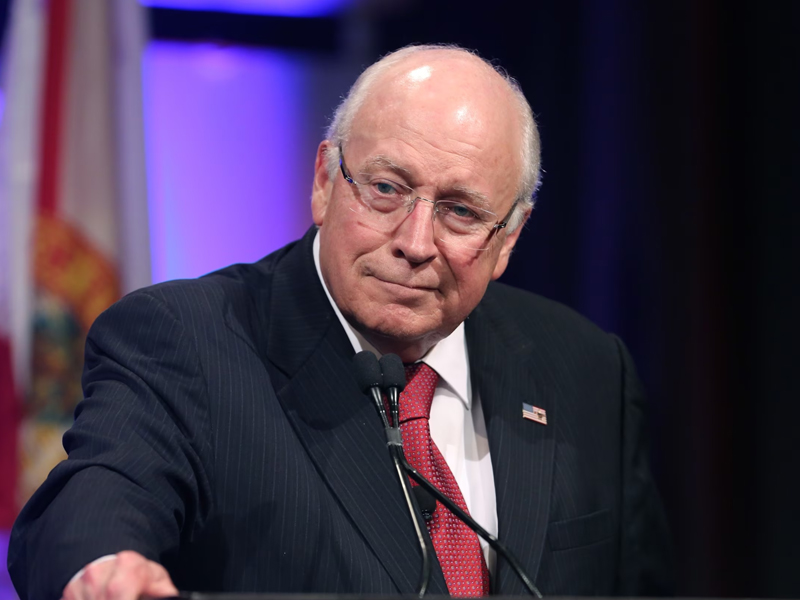
Today we mark the passing of Dick Cheney at age 84 — a man who served as Vice President of the United States, major architect of U.S. foreign policy in the post-9/11 era, and one of the most polarizing figures in modern American politics.
As news sites note: “Cheney was a hard-charging conservative … one of the most powerful and polarizing vice presidents in U.S. history.”
What’s striking today is not just the death itself — but the reaction. On one side, public mourning, tributes, and reflections. On the other, expressions of contempt, relief, or unresolved anger.
This piece isn’t an attempt to re-litigate Cheney’s record (though it was vast, complicated, and consequential). Rather: what this moment tells us about our collective state — how we process public figures, how we grapple with legacy, and how we might step out of the echo chamber.
1. The Mirror of Reaction
When someone like Cheney dies, the public event becomes a mirror — reflecting deeper cultural, political, and emotional fissures.
For many on the right, Cheney is remembered as “a decent, honorable man,” a patriot who served multiple administrations, and stood firm in turbulent times.
For many on the left, his legacy is deeply tied to controversial decisions: the expansion of executive power, the war in Iraq, surveillance programs, the perception of secrecy and unaccountability.
The reactions tell us less about Cheney alone than about how partisans freeze their verdicts. Death turns the moment into a ritual — accolades from one side, indictments from another, rarely the quiet space to hold both truth and nuance.
2. Why This Matters
a) The legacy trap
When we reduce a life to a checklist of “good” or “evil,” we lose the ability to learn. Cheney’s career spanned decades, roles (Congressman, Defense Secretary, Vice President) and contexts (Cold War, post-9/11). In sweeping that complexity away, we lose lessons about power, responsibility, and history.
b) The polarization trap
The fact that the responses are so extreme – from “hero” to “villain” with little in between – shows how binary we’ve become. Loss of nuance fuels division, silences grief, and prevents real dialogue.
c) The human dimension
Amid all the policy, the ideology, the stature, there was a family. A husband, father, someone with friendships, missteps, loyalties. For them, this is a private loss. The public spectacle tends to overshadow that dimension.
3. How To Rise Above
Here are some guideposts for how we might engage this kind of moment with awareness—instead of pick-sides reflex.
a) Acknowledge the person first
Regardless of your view of Cheney’s choices, start by recognizing the human: 61 years of marriage, daughters, years of service, years of criticism. Life isn’t only what a person did but what they were.
b) Hold complexity
Say: “He made decisions I believe were wrong,” and “He also served in roles that demanded sacrifice.” Recognise that people can be contradictory. The real value lies when we refuse easy categories.
c) Reflect on ourselves
Ask: Why do I feel relief or anger at his death? What part of me is at ease? What part unsettled? Our reactions show what we carry—our beliefs, fears, grievances.
d) Engage learning, not victory
Rather than scoring a moral win, commit to asking: What decisions did Cheney make that still affect us now? What systems are we replicating or challenging because of that legacy? How might we act differently?
e) Extend compassion
For those who see Cheney only as a destroyer, there may be hurt, disgust, unresolved trauma (particularly if tied to policies). For those who see him only as a hero, there is loss and sorrow. Respect both. Holding compassion isn’t weakness—it’s strength.
Conclusion
The death of Dick Cheney is more than the end of a life. It is a moment in which our divisions, our narratives, our struggle with power are laid bare. Do we treat it as a moment to score points, or do we treat it as an invitation to think deeper?
We can, each of us, choose to stop being prey to the click-bait of outrage, the reflex of triumph or disgust. We can choose curiosity, humility, complexity.
In that choice lies the real tribute—not only to Cheney but to the society he and we shaped. And to the one we might build next.
Leave a Reply