
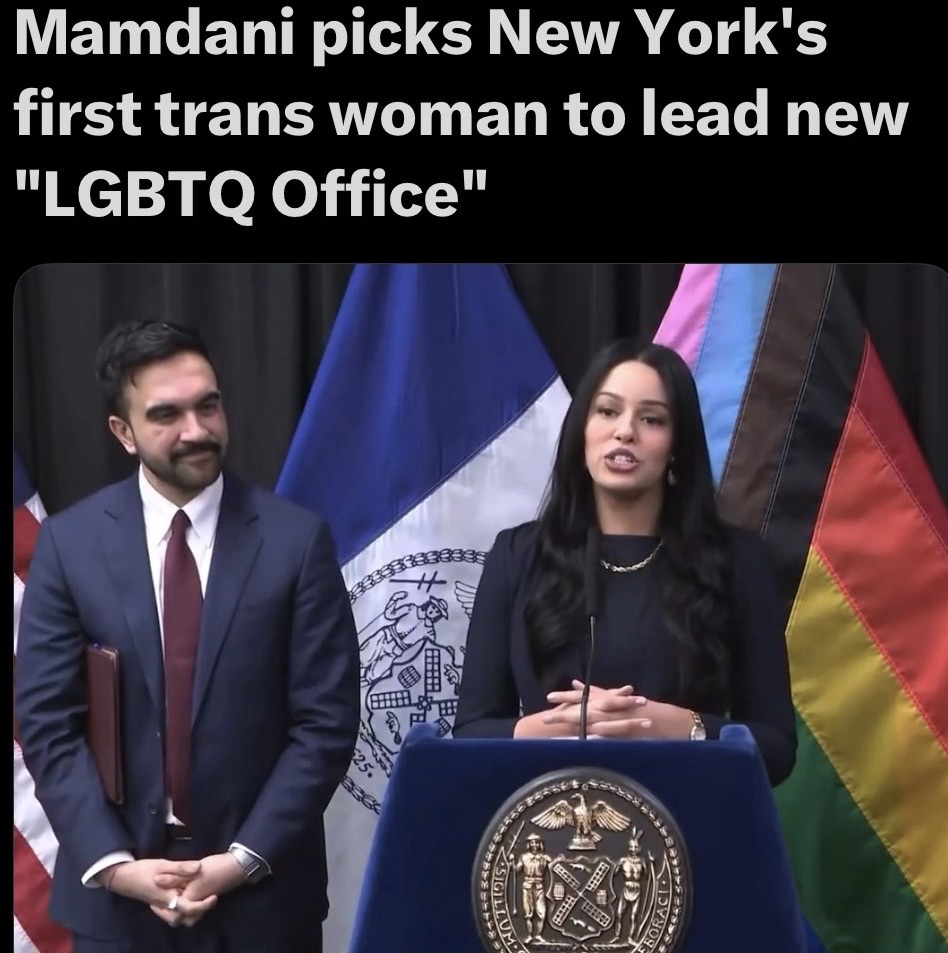
A while back we published an article examining one of the most powerful little words in modern political media: “first.”
If there ever was a single word in the English language that was weaponized to manipulate the masses, it’s the word first.
When a headline tells you someone is the first anything, it immediately transforms a normal appointment into a historic event. The word does enormous rhetorical work. It elevates the subject to sainthood status before the public even knows who they are, what they believe, or whether they will be effective in the job.
The word first is a shield. Once the label is applied, criticism becomes socially dangerous. After all, who wants to be seen attacking a historic milestone? Criticism of the appointment, the appointee or any future actions become difficult.
And now this elegant mechanism has appeared again. Headlines across social media read almost identically:
“BREAKING: Mayor Mamdani names NY’s first trans woman to lead new LGBTQI+ office.”
Look closely at the construction of that sentence. The headline contains two different “firsts.”
First: the individual.
Second: the office itself. But the office is brand new, which raises an obvious question.
How exactly can someone be the “first whatever kind of person” to lead an office that didn’t exist until the moment it was created?
It’s a clever bit of linguistic engineering. The structure manufactures a historic milestone out of thin air, while providing a layer of protection for all involved.
Create a new office, fill the office, declare the appointment historic.
In reality, every newly created position has a “first” occupant. The first person to run a brand-new department is not a milestone — it’s simply the only possible outcome.
But by attaching identity language to the headline, the story and the appointment is instantly elevated. The audience is not invited to ask ordinary questions:
What will this office actually do?
What authority does it have?
What is the budget?
What measurable outcomes will determine success?
Those questions disappear behind the ominous glow of the historic implication given to it by the word “first.”
This is how narrative framing works in modern media. A single word shifts the focus away from performance and toward symbolism.
Representation becomes the story. Results become an afterthought.
None of this tells us whether the office will help people or waste taxpayer money. None of it tells us whether the person chosen is competent, thoughtful, or effective. All we know is that they are the first.
And in today’s media ecosystem, that word alone is expected to carry the entire story. Because the rest of the story is usually bullshit.
Leave a Reply